7 Signs It's Time to Remodel Your Restaurant
Not sure if your restaurant needs a renovation? Here are seven clear indicators that it is time to invest in a remodel, from declining sales to compliance concerns.
Every restaurant has a lifecycle. A space that felt fresh and inviting when it opened gradually loses its edge as finishes wear, trends evolve, and operational demands change. The challenge for most restaurant owners is not recognizing that a remodel might help, but knowing when the investment becomes necessary rather than optional.
Here are seven signals that your restaurant has reached that tipping point, and that a renovation will deliver a meaningful return rather than just a cosmetic lift.
1. Declining Revenue Without a Clear Operational Cause
When sales are trending down and you have already evaluated your menu, service, marketing, and pricing without finding a clear explanation, the physical space itself may be the problem. Guests make dining decisions based on atmosphere more than most operators realize. A space that looks dated, feels uncomfortable, or fails to create an appealing ambiance will lose covers to competitors who have invested in their environments, even if the food quality is comparable.
This does not mean every revenue dip warrants a renovation. But if you have addressed the obvious operational factors and guests are still choosing to eat elsewhere, your space is telling you something.
What to Look For
- Declining repeat visits from regulars who have not changed their dining habits
- New competitors in your market drawing guests away with updated spaces
- Feedback or review comments mentioning the atmosphere, even indirectly
- A widening gap between your food quality and the environment it is served in
2. Negative Reviews Mentioning Atmosphere or Cleanliness
Online reviews are a blunt but honest mirror. When guests mention that a restaurant "looks tired," "feels outdated," "could use a refresh," or raises cleanliness concerns tied to worn finishes rather than actual sanitation problems, the physical space is actively damaging your reputation.
Stained ceiling tiles, worn carpet, chipped laminate, dated lighting, and shabby booth upholstery all create an impression that cannot be overcome with excellent food alone. Guests associate the visual condition of a restaurant with its overall quality, including the kitchen they cannot see.
If your online reviews consistently reference the physical space, even in passing, a renovation is no longer a future consideration. It is a current business need.
3. An Inefficient Kitchen or Service Layout
Layouts that worked when your restaurant opened may not work for how your operation runs today. Menu evolution, delivery and takeout volume, staffing changes, and new equipment all create friction in a kitchen that was designed for a different workflow.
Common Layout Problems
- Bottlenecks at the pass or expo station during peak service
- Cross-traffic between servers and kitchen staff that slows everyone down
- Inadequate prep space that forces workarounds and inefficiency
- A bar that cannot keep up with demand because the well layout is undersized
- No dedicated space for to-go or delivery order staging
These inefficiencies cost you money every shift in the form of slower table turns, higher labor hours per cover, and food quality inconsistency. A restaurant renovation focused on layout optimization often pays for itself faster than any cosmetic upgrade because the savings are measurable and ongoing.
4. Worn Finishes That Cleaning Cannot Fix
There is a difference between a restaurant that needs cleaning and a restaurant that needs renovating. When finishes have reached the end of their useful life, no amount of deep cleaning will restore them. Grout that is permanently discolored, flooring with visible wear paths, vinyl seating with cracked or peeling surfaces, and woodwork with finish failure are all beyond maintenance solutions.
Commercial restaurant environments are harsh. High foot traffic, kitchen grease, moisture, and constant cleaning with commercial chemicals degrade surfaces faster than residential or office settings. Most restaurant finishes have a seven- to twelve-year effective lifespan before replacement becomes necessary, though high-traffic areas often need attention sooner.
If your staff is spending increasing time trying to make worn surfaces look acceptable, the return on that labor investment has diminished past the point where replacement makes more financial sense.
5. Rising Energy Costs
Older HVAC systems, outdated lighting, and inadequate insulation directly impact your energy bills, and restaurants are already among the most energy-intensive commercial spaces. If your utility costs have been climbing steadily and your rates have not changed dramatically, your building systems are likely losing efficiency.
Energy Upgrades That Pay for Themselves
- LED lighting conversion: Reduces lighting energy use by 50 to 70 percent with a payback period typically under two years
- HVAC replacement or upgrade: Modern commercial systems are significantly more efficient, and restaurant-specific challenges like kitchen exhaust makeup air can be addressed with current technology
- Insulation and weatherization: Especially important in older buildings where the envelope has degraded
- Kitchen ventilation optimization: Demand-controlled kitchen ventilation adjusts exhaust based on cooking activity rather than running at full speed continuously
A remodel that includes energy system upgrades partially funds itself through ongoing utility savings, and in many jurisdictions, rebates and incentives are available that further reduce the net cost.
6. Code Compliance Red Flags
Building codes, health codes, fire codes, and accessibility requirements evolve over time. A restaurant that was fully compliant when it was built or last renovated may have fallen behind current standards. While most jurisdictions do not require retroactive compliance simply because a code has changed, any renovation above a certain dollar threshold will trigger a requirement to bring the affected areas, and sometimes the entire facility, up to current code.
Common Compliance Gaps in Older Restaurants
- ADA accessibility: Restroom dimensions, entry thresholds, counter heights, and accessible seating that do not meet current standards
- Fire suppression: Hood suppression systems that have been modified or are no longer UL-listed for the current equipment configuration
- Electrical capacity: Panels and circuits that were adequate for the original equipment load but are now overloaded
- Health department standards: Equipment spacing, finish materials, and ventilation that do not meet current health code
Proactively addressing compliance during a planned renovation is significantly less expensive than being forced to address it reactively after a failed inspection or complaint. If you are aware of compliance gaps, building a renovation around correcting them, while also improving the guest experience, is the most cost-effective approach.
7. Franchise or Brand Update Cycles
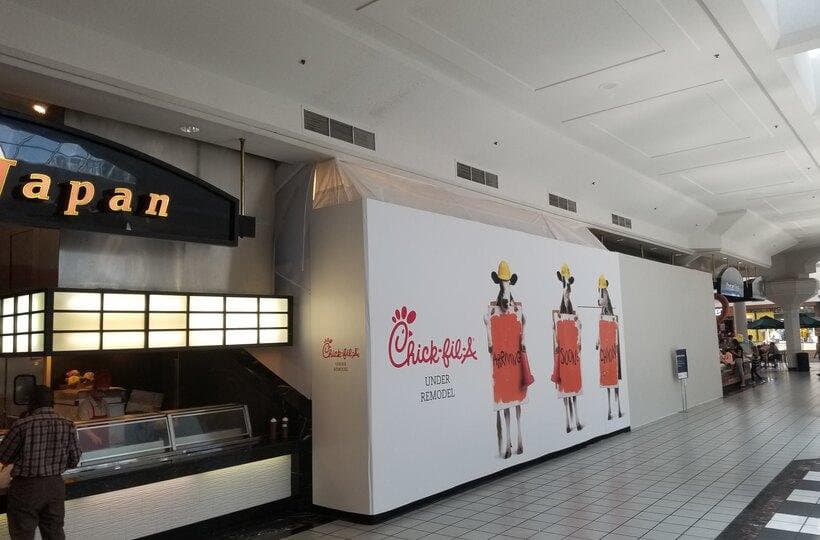
If you operate a franchise or multi-unit brand, periodic remodels are typically required by the brand standards. These updates ensure consistency across locations and keep the brand's physical presence aligned with its marketing and competitive positioning.
Franchise remodel cycles typically run every seven to ten years, and the scope is usually defined by the brand. However, there is often room to coordinate brand-required updates with operational improvements that the brand guidelines do not cover, such as kitchen efficiency upgrades or energy system replacements. Combining these scopes into a single construction project is almost always more cost-effective than doing them separately.
Even if you do not operate a franchise, the seven- to ten-year cycle is a reasonable benchmark for any restaurant. Guest expectations and design trends shift meaningfully within that window, and building systems accumulate enough wear to warrant evaluation.
The Cost of Waiting
The most common mistake restaurant owners make is not deciding to remodel too early but waiting too long. Every month that a dated or inefficient space is operating, it is costing you in lost covers, reduced check averages, lower guest satisfaction, higher energy bills, and increased maintenance labor. Those costs are real even though they do not appear as a single line item on a P&L statement.
A renovation planned proactively, with adequate time for preconstruction, design, and procurement, will cost less and deliver better results than one driven by an emergency, a failed inspection, or a sudden competitive threat.
Taking the First Step
If two or more of the signs above apply to your restaurant, it is worth having a professional evaluate your space and provide a realistic scope and budget. You do not need to commit to construction to get that information, and having it allows you to plan on your timeline rather than reacting to circumstances.
Book a site assessment with Tekton Construction Group to understand what your restaurant needs now, what can wait, and what the investment looks like. We specialize in restaurant construction and can give you a clear, honest evaluation.