How Long Does a Restaurant Remodel Really Take?
Get realistic timelines for every type of restaurant renovation, learn what speeds things up or slows things down, and discover phasing strategies to stay open during construction.
Timeline is typically the second question restaurant owners ask, right after cost. And like cost, the honest answer is that it depends on scope. But how it depends on scope is predictable, and understanding the timeline drivers puts you in a much better position to plan your renovation, protect your revenue, and set realistic expectations with your team, your landlord, and your guests.
This guide provides realistic timelines by project type, explains what makes projects go faster or slower, and covers phasing strategies that allow you to stay open during construction.
Realistic Timelines by Project Type
These ranges include preconstruction, permitting, and construction. They assume a competent contractor with restaurant experience, standard permitting timelines, and no extraordinary complications.
| Project Type | Total Timeline | Construction Only | |---|---|---| | Cosmetic dining room refresh | 6 - 10 weeks | 3 - 5 weeks | | Dining room remodel (layout changes) | 10 - 16 weeks | 6 - 10 weeks | | Bar renovation | 8 - 14 weeks | 5 - 8 weeks | | Kitchen renovation | 12 - 20 weeks | 8 - 14 weeks | | Full restaurant remodel | 16 - 28 weeks | 10 - 18 weeks | | Ground-up restaurant buildout | 20 - 36 weeks | 14 - 24 weeks |
The gap between total timeline and construction-only timeline is preconstruction and permitting, which typically takes four to eight weeks depending on scope and jurisdiction. This phase happens before a single tool is picked up, and it is where many owners underestimate the time required.
Why the Ranges Are Wide
The low end of each range assumes a straightforward project: standard finishes, no structural complications, efficient permitting, and available materials. The high end reflects complexity: custom millwork, structural modifications, lengthy permit review, specialty equipment with long lead times, or phased construction to stay open.
Your contractor should narrow these ranges during preconstruction based on your specific scope, building conditions, and local market factors.
What Speeds Things Up
Certain practices consistently result in shorter, smoother construction timelines.
Early Contractor Engagement
The most impactful thing you can do to protect your timeline is to engage a contractor before you finalize your design. When the contractor is involved during design development, they identify constructability issues, budget conflicts, and scheduling constraints before they become problems during construction. Design decisions made without construction input frequently result in redesign, re-pricing, and delays.
Complete Design Before Construction
Starting construction with incomplete drawings, unresolved details, or pending material selections is a guaranteed path to delays. Every question that cannot be answered because the design is not finalized creates a pause in construction while the answer is sought, communicated, and implemented. A complete, detailed design before construction starts is the single most effective timeline protection.
Early Material and Equipment Procurement
Kitchen equipment, custom millwork, specialty tile, and certain lighting fixtures can take four to twelve weeks from order to delivery. If these items are not ordered until construction is underway, crews reach the installation phase with nothing to install. This creates dead time on the schedule that extends the project duration.
The solution is ordering long-lead items during preconstruction, timed to arrive when the construction schedule needs them. This requires that selections be finalized early, which reinforces the importance of a thorough preconstruction phase.
Experienced Subcontractor Team
A contractor who works with the same subcontractors regularly has a coordination advantage. The subs know the contractor's expectations, communication protocols, and scheduling approach. They prioritize projects from contractors who provide them consistent work. This translates to more reliable scheduling, fewer coordination errors, and faster problem resolution.
Clean Permitting
A permit application that is complete, code-compliant, and well-organized on first submission moves through review faster than one that requires corrections and resubmission. Experienced contractors and architects know what local jurisdictions look for and submit accordingly. A single revision cycle can add two to four weeks to the permitting phase.
What Slows Things Down
Understanding the common causes of delay helps you avoid them or at least plan for them.
Design Changes During Construction
Changes to the design after construction has started are the single most disruptive event to a construction schedule. A change that seems minor to the owner, such as moving a wall opening eighteen inches, can cascade into structural modifications, MEP rerouting, millwork reorders, and inspection resequencing. Every mid-construction change carries both a cost and a schedule impact.
This does not mean changes are never necessary. Concealed conditions sometimes require design adjustments. But discretionary changes, things the owner decides to change after seeing work in progress, are preventable with thorough design development before construction.
Permit Delays
Permitting timelines vary by jurisdiction and are often outside the contractor's control. Health department reviews for restaurant kitchens can be particularly time-consuming, especially for complex ventilation and equipment layouts. Some municipalities have predictable review timelines while others are significantly backlogged.
Your contractor should know the typical permitting timeline in your jurisdiction and factor it into the project schedule. If your market has a reputation for slow permitting, starting the permit process earlier, even before the design is fully complete, may be appropriate.
Material Lead Times
Supply chain disruptions have moderated since their peak, but certain items still carry extended lead times. Custom-fabricated items, imported materials, and specialty kitchen equipment can take eight to sixteen weeks. Standard commercial materials are generally available within two to four weeks, but specific colors, patterns, or formats may take longer.
Concealed Conditions
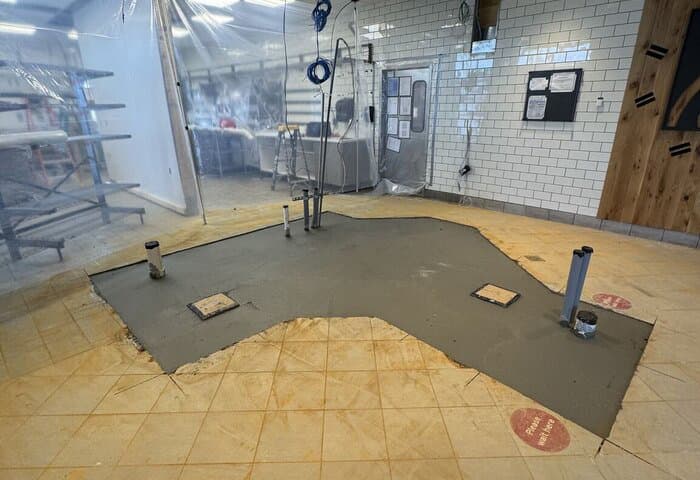
Opening walls and floors in an existing building sometimes reveals conditions that were not visible during preconstruction assessment. Outdated electrical wiring, water-damaged framing, deteriorated plumbing, asbestos-containing materials, or structural conditions that differ from available drawings all require evaluation, redesign, and additional work that extends the schedule.
A contingency allowance in both the budget and the schedule accounts for this risk. For older buildings, a schedule contingency of one to two weeks is prudent.
Inspection Scheduling
Building inspections are required at specific points during construction, and the project cannot proceed past those points until the inspection is passed. If the local inspection department has a multi-day scheduling backlog, each inspection point becomes a potential delay. Experienced contractors anticipate inspection timing and schedule work to minimize idle time while waiting for inspectors.
Phasing Strategies to Stay Open
For most restaurant operators, closing completely during renovation is a last resort because of the revenue loss, staff displacement, and customer attrition it creates. Phasing the construction to allow continued operation, even at reduced capacity, is almost always preferable.
Zone-Based Phasing
The most common approach divides the restaurant into construction zones that are renovated sequentially. While one zone is under construction, the remaining zones continue operating. Typical zone sequences:
- Phase 1: Renovate the back dining area while the front dining area and bar remain open
- Phase 2: Renovate the front dining area while guests use the newly completed back area and bar
- Phase 3: Renovate the bar while the full dining room operates
Each phase includes proper construction barriers, dust control, noise management, and modified guest flow patterns.
Off-Hours Construction
Scheduling the most disruptive construction activities, such as demolition, concrete cutting, heavy deliveries, and loud mechanical work, during hours when the restaurant is closed minimizes guest impact. This may mean early morning or late night construction shifts, which can carry premium labor costs but preserve your full operating hours.
Temporary Closures for Critical Work
Some work simply cannot be phased, particularly kitchen renovations that require disconnecting all cooking equipment and ventilation. For these projects, a planned temporary closure of one to three weeks, scheduled during your slowest business period, is often more cost-effective than an extended phased approach that reduces capacity for months.
Hybrid Approaches
Many successful restaurant renovations combine these strategies. For example, a project might use zone-based phasing for the dining room and bar over eight weeks, followed by a two-week full closure for the kitchen renovation, and conclude with a soft reopening. This approach minimizes total revenue loss while allowing efficient construction sequencing.
Building a Realistic Schedule
The best project schedules share three characteristics: they are based on actual scope rather than desired completion dates, they include contingency for the unexpected, and they are developed collaboratively between the owner, contractor, and design team.
During preconstruction, your contractor should provide a detailed schedule that shows every activity, its duration, its dependencies, and the critical path, which is the sequence of activities that determines the minimum project duration. Understanding the critical path tells you which activities must stay on schedule to protect the completion date and which have float.
Request a timeline review from Tekton Construction Group. We build realistic, detailed project schedules during preconstruction so you know exactly when your restaurant renovation will start, how it will progress, and when you will be back to full operation.