Front-of-House vs. Back-of-House Remodel: What Matters Most
Should you prioritize your dining room or your kitchen? Learn how to evaluate front-of-house and back-of-house renovation priorities for the best return on your restaurant investment.
When budget and timeline require you to choose between renovating the front of house and the back of house, the decision is not as straightforward as it might seem. The dining room is what guests see, but the kitchen is what makes the operation run. Both sides of the restaurant affect revenue, guest satisfaction, and operational efficiency, but they do so in different ways and on different timescales.
This guide breaks down the impact of each type of renovation, provides a framework for prioritization, and outlines how hybrid phasing plans can give you the best of both worlds.
Front-of-House Upgrades That Drive Revenue
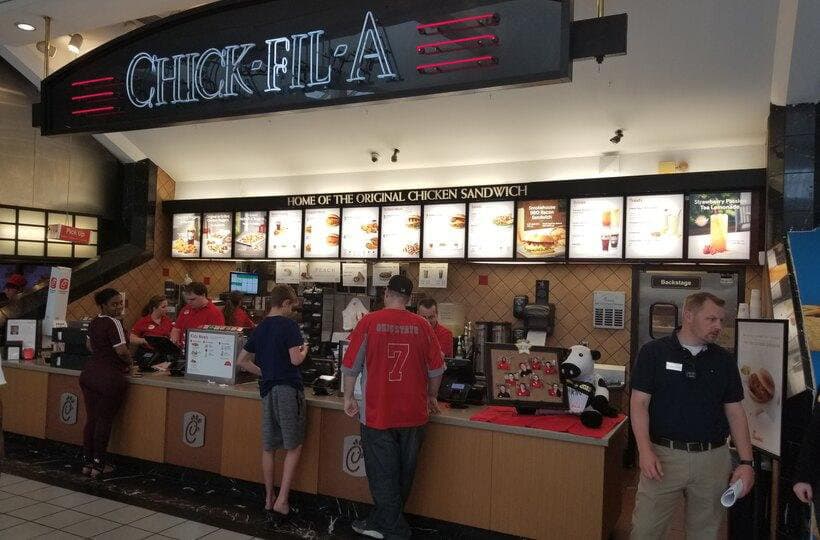
The front of house, which includes the dining room, bar, entry, host area, and restrooms, is the guest-facing environment. Renovations here have an immediate and visible impact on guest perception, behavior, and spending.
The Revenue Case for FOH Renovation
Front-of-house improvements drive revenue through several mechanisms:
- Increased guest traffic -- A refreshed space generates new interest, social media visibility, and word-of-mouth. Lapsed customers return, and new guests visit to experience the updated environment.
- Higher average check -- Guests in a premium environment perceive greater value and are willing to spend more. Dining rooms that look and feel upscale support upscale pricing.
- Improved table turns -- Layout optimization, better seating mix, and improved service flow can increase covers per shift without adding square footage.
- Stronger bar revenue -- An upgraded bar with better seating, lighting, and atmosphere attracts guests who dine at the bar by choice and encourages higher beverage spending.
High-Impact FOH Improvements
Not all front-of-house improvements are equal in their revenue impact. Based on our experience building and renovating restaurants, these consistently deliver the strongest returns:
Lighting redesign. Lighting has a disproportionate impact on atmosphere relative to its cost. Replacing outdated or flat lighting with a layered scheme of ambient, task, accent, and decorative lighting transforms the feel of a space. Warm color temperatures, dimming capability, and intentional focal points create an environment guests want to be in and want to return to.
Seating and layout reconfiguration. Right-sizing your seating mix, adding bar and banquette seating, improving spacing, and optimizing traffic flow can meaningfully increase capacity and improve the guest experience simultaneously. Many restaurants are over-committed to four-top tables when their actual demand favors a more flexible mix.
Bar renovation. The bar is increasingly the social and financial center of modern restaurants. Investing in bar seating, display, lighting, and workflow pays returns through higher-margin beverage sales and increased dwell time.
Restroom upgrades. Restroom condition disproportionately influences guest perception of the entire restaurant. A modern, clean, well-designed restroom signals quality. A worn restroom undermines everything the dining room is trying to communicate.
Entry and host area. The first impression is set at the door. An inviting entry, comfortable waiting area, and polished host stand establish expectations for the entire experience.
Back-of-House Changes That Improve Throughput
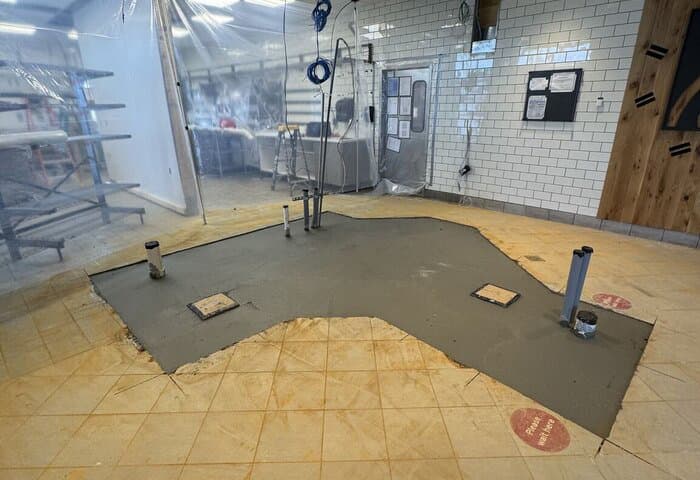
The back of house, which includes the kitchen, prep areas, dish station, dry and cold storage, and receiving, is the engine room. Renovations here are invisible to most guests but directly affect food quality, speed of service, labor efficiency, and operating costs.
The Operations Case for BOH Renovation
Back-of-house improvements drive financial performance through:
- Increased throughput -- A better-designed kitchen produces more plates per labor hour. Reduced cross-traffic, properly sequenced stations, and adequate equipment capacity eliminate bottlenecks that limit covers per shift.
- Lower labor cost per cover -- Efficient layout reduces the number of steps, reaches, and movements required for every task. Over a year of service, this adds up to meaningful labor savings.
- Improved food quality and consistency -- Modern equipment with better temperature control, properly sized prep and plating areas, and organized workflow reduce errors and produce more consistent results.
- Reduced utility costs -- New kitchen equipment is significantly more energy-efficient than older models. Modern ventilation systems with demand-controlled exhaust, high-efficiency refrigeration, and induction cooking options all reduce utility expense.
- Extended equipment life -- Replacing aging equipment before catastrophic failure avoids emergency replacement costs, which are always higher than planned replacement.
High-Impact BOH Improvements
Kitchen layout reconfiguration. The single highest-impact back-of-house improvement is optimizing the kitchen workflow. This means sequencing stations logically from receiving through storage, prep, cooking, plating, and service, with minimal cross-traffic and maximum efficiency. Even modest layout changes can significantly improve throughput.
Cooking line upgrade. Modern cooking equipment is faster, more precise, more energy-efficient, and more reliable than equipment from even ten years ago. Combi ovens, induction ranges, and blast chillers expand what a kitchen can produce with fewer pieces of equipment and less energy.
Ventilation system replacement. Restaurant kitchen ventilation is expensive to operate and often operates at full capacity regardless of cooking activity. Demand-controlled kitchen ventilation systems adjust exhaust based on actual cooking load, reducing energy use by 30 to 50 percent. New hood systems also improve capture efficiency, keeping the kitchen more comfortable for staff.
Walk-in cooler and freezer upgrades. Storage capacity and organization directly affect food cost, prep efficiency, and delivery scheduling. Modern walk-in systems with improved insulation, efficient compressors, and better shelving reduce energy costs and improve food safety.
Dish station optimization. The dish station is often the most neglected area in a restaurant kitchen, yet it is a critical bottleneck during peak service. Proper layout, an appropriately sized machine, and adequate staging space for dirty and clean items keeps dish from becoming a constraint on dining room table turns.
How to Decide What to Prioritize
The right choice depends on where your most pressing problems and biggest opportunities lie. Here is a framework for evaluation.
Prioritize FOH When:
- Guest feedback or reviews reference the atmosphere, decor, or overall feel
- Revenue is declining despite consistent food quality and service
- Your space looks dated compared to competitors
- You have recently upgraded your menu or service model and the space does not match
- Bar revenue is underperforming relative to your concept and market
Prioritize BOH When:
- Kitchen throughput is limiting covers during peak service
- Food quality or consistency has declined due to equipment issues
- Labor costs per cover are rising because of inefficient layout
- Utility bills are climbing due to aging equipment
- Equipment failure risk is creating operational vulnerability
- You are adding menu items or service channels (delivery, catering) that the current kitchen cannot support
Prioritize Both When:
- You are doing a full concept change or repositioning
- The space has not been renovated in ten or more years
- You are opening in a new location that requires a full buildout
- Franchise standards require a comprehensive update
Hybrid Phasing Plans
For operators who need to address both front-of-house and back-of-house but cannot do both simultaneously, a phased approach offers the best balance of financial management and operational continuity.
Phase 1: BOH First, FOH Second
This approach renovates the kitchen during a planned closure or reduced-hours period, then addresses the dining room in a subsequent phase while the kitchen operates normally. The advantage is that kitchen renovations are disruptive to operations and difficult to phase while cooking, so getting them done in a concentrated period makes sense. The dining room can be renovated in zones while the restaurant operates.
Phase 2: FOH First, BOH Second
This approach makes sense when the dining room is the more urgent need and the kitchen, while dated, is still functional. Renovating the dining room first generates increased revenue that helps fund the subsequent kitchen phase. Dining room renovations are easier to phase because construction zones can be isolated from operating areas more effectively than in a kitchen.
Integrated Phasing
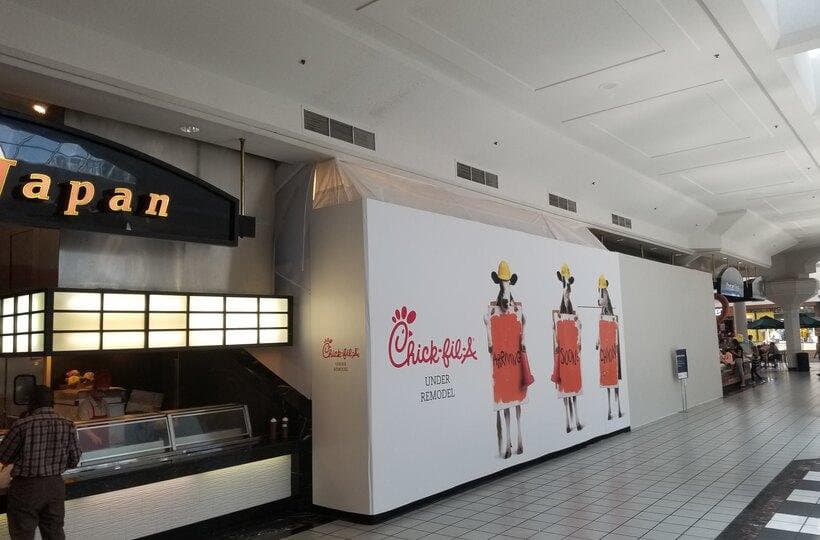
Some projects renovate both areas simultaneously using a zone-by-zone approach. For example, the bar and adjacent kitchen section are renovated together in phase one, while the main dining room and cooking line are renovated in phase two. This approach requires detailed planning and experienced coordination but can compress the overall renovation timeline.
Phasing Considerations
- Revenue impact during each phase: which approach minimizes lost revenue?
- Construction efficiency: are there shared systems (MEP, fire suppression) that are cheaper to address together?
- Guest experience during construction: can you maintain an acceptable experience during each phase?
- Seasonal timing: schedule the most disruptive phases during your slowest periods
Making the Decision
The best restaurant renovations are not driven by which side of the house gets attention first. They are driven by a clear understanding of where the biggest problems and opportunities are, a realistic budget that accounts for both visible and invisible improvements, and a phasing plan that manages risk while maintaining revenue.
Get a prioritized scope plan from Tekton Construction Group. We assess both front-of-house and back-of-house conditions, identify the highest-return improvements for your specific operation, and develop a phasing plan that fits your budget and timeline. Learn more about our restaurant construction services.