How QSR Brands Are Building Smarter in a Value-Optimized Market
What value optimization actually looks like on a QSR jobsite: leaner scope, material swaps, existing buildings over ground-up, and execution planning.
The short version: QSR brands are working out cost decisions before drawings are finalized instead of after a bid comes in high. On our projects that's showing up as leaner scope, different material choices, existing buildings over ground-up builds, asphalt where concrete isn't earning its cost, and execution planned so the store can stay open.
The conversations we're having with clients have shifted.
QSR brands are navigating real headwinds right now. Consumers are more price-sensitive, traffic patterns have changed, and the pressure on same-store sales has brands rethinking where and how they spend on construction and facilities. Value optimization has moved from a reactive budget conversation to a front-end strategy. Most of the industry calls this value engineering. Same idea, different timing. A few years ago it came up late, usually when a project came in over budget and someone needed to find cuts fast. Now it's happening before drawings are finalized, before bids go out. Brands are building it into the process from day one.
We're seeing this across the board in quick-service restaurant construction. Here's what it actually looks like on the ground.
Scope Is Getting Leaner and More Deliberate
Full-restaurant overhauls are giving way to targeted improvements. Instead of rolling out a large scope across multiple locations at once, brands are breaking projects into smaller phases, spreading the investment over time and getting more control over cash flow and quality.
It's not a pullback. It's smarter sequencing.
Material Choices Are Evolving
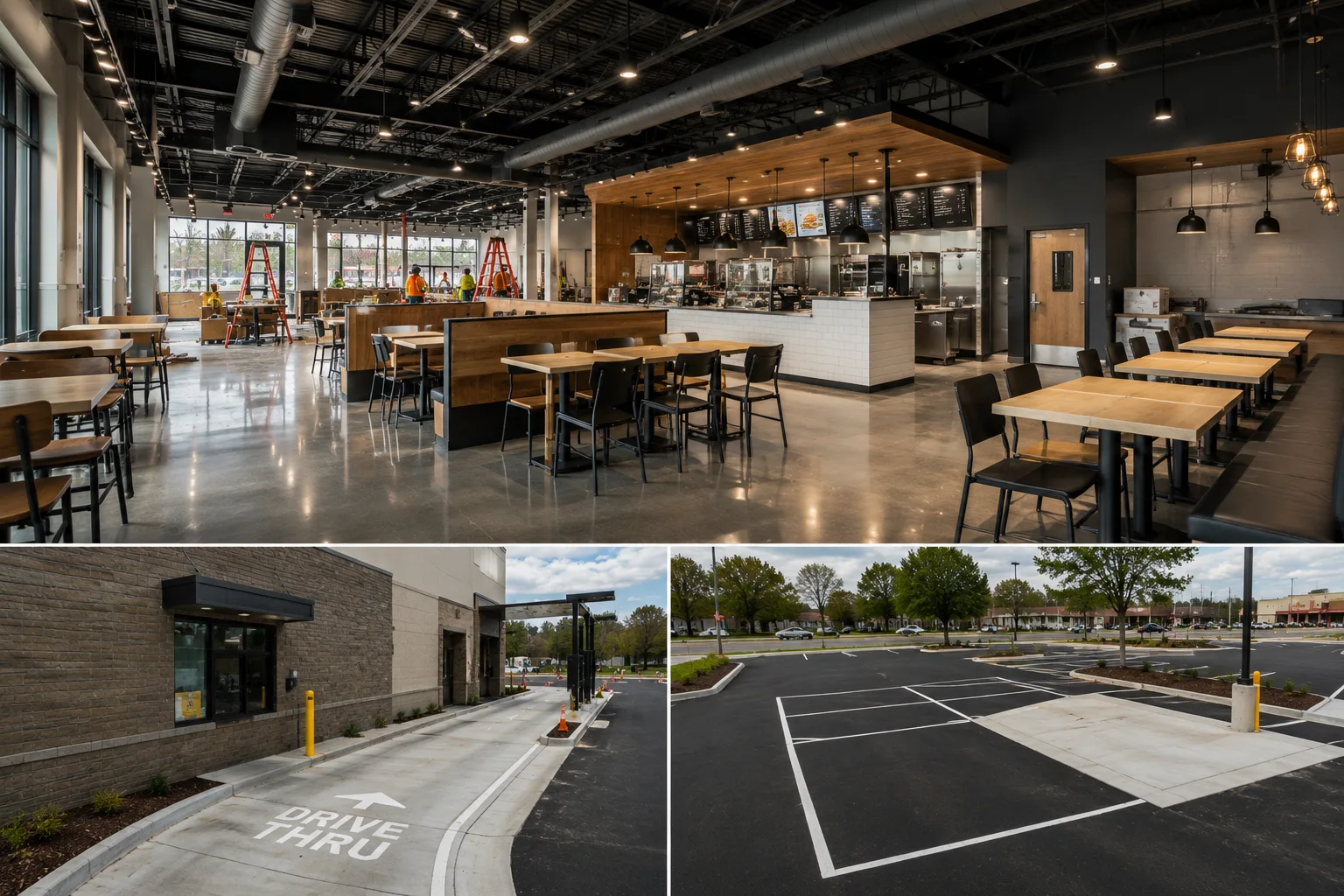
Brands are finding ways to hit the same visual standard at a lower cost. Two we see consistently:
Polished concrete floors are replacing tile and luxury vinyl in high-traffic areas. Brands making this switch point to lower install cost, no adhesive or grout, and reduced long-term maintenance. For a multi-location brand, that math adds up fast.
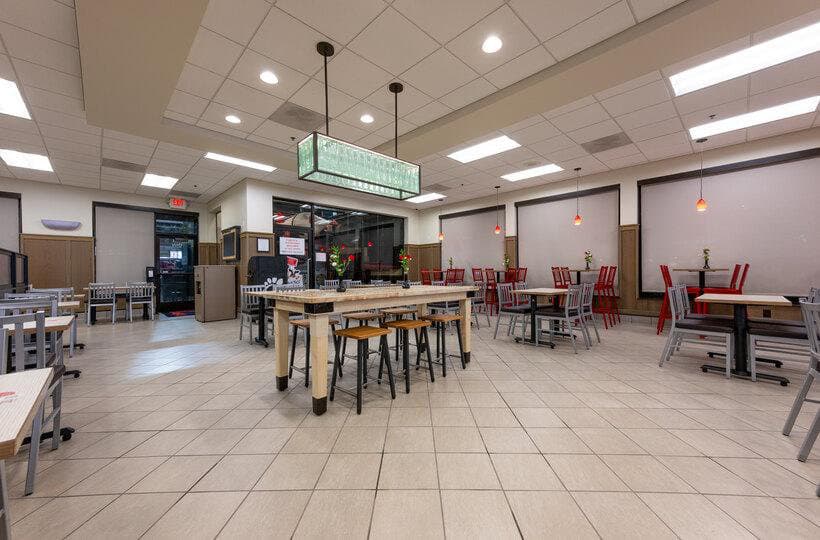
Exposed ceiling designs are replacing drop ceilings in dining areas. Eliminating the grid, tile, and mechanical concealment work is one of the more visible ways brands are trimming both material and labor cost without changing the customer experience.
These aren't compromises. They're design choices brands are making deliberately because the cost difference is real.
Existing Buildings Over Ground-Up
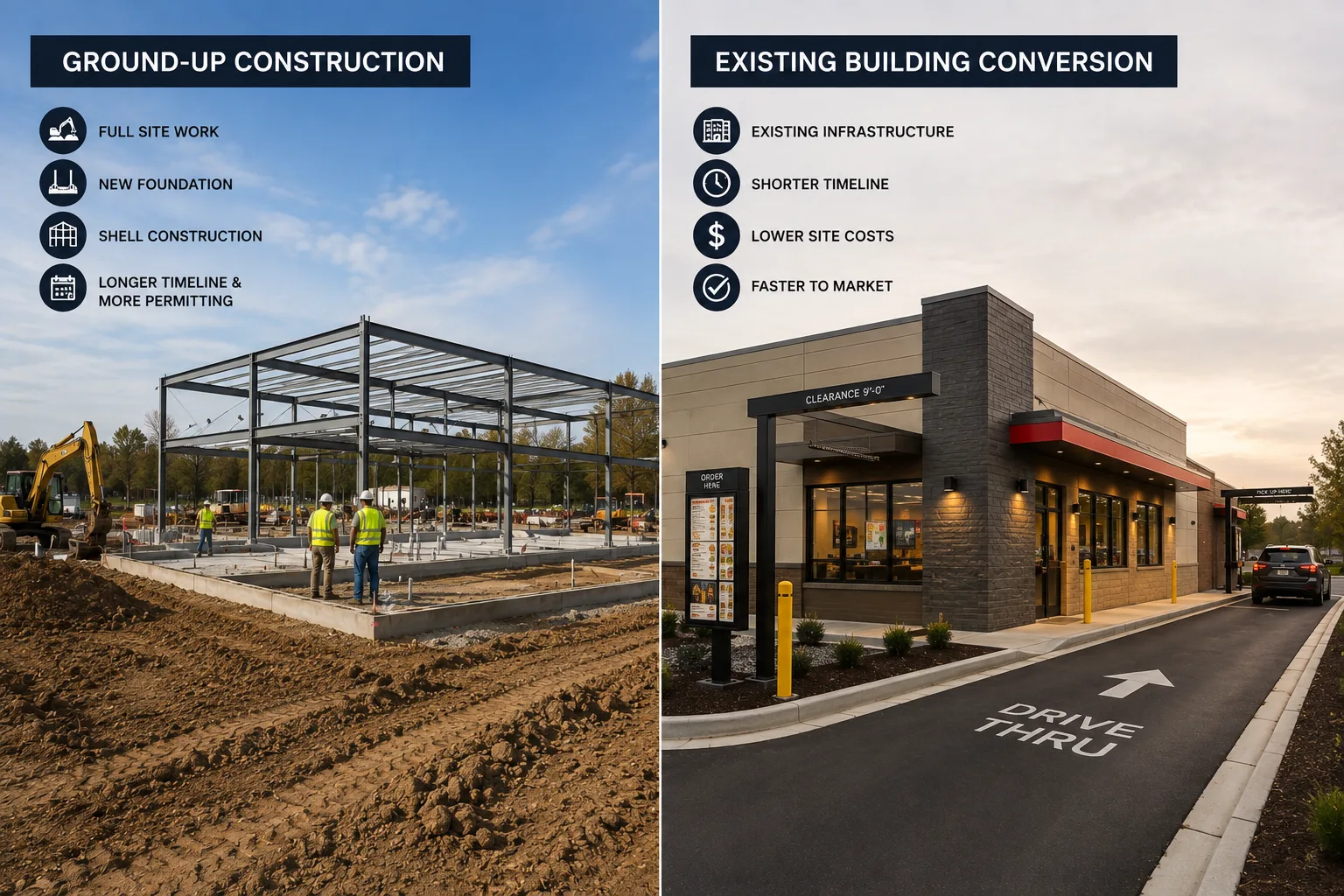
One of the more significant shifts we're seeing is brands choosing to move into existing buildings rather than build from scratch. Inline spaces, second-generation restaurant buildings, former retail, brands are looking at what's already standing and asking whether it can be made to work instead of starting from a pad.
A second-generation space is one that already operated as a restaurant, which often means some of the grease interceptor, hood, utility service, and floor drain work is already there. That's a real part of why the math works.
The cost difference is real. A ground-up build carries full site work, foundation, shell construction, and all the time and permitting that comes with it. An existing building eliminates most of that. Even when the interior requires significant renovation to meet brand standards, the math often still favors the conversion. We're seeing brands make this call more deliberately than they used to.
Site Work Is Being Rebalanced
Parking lot specs are shifting too. We're seeing more brands specify asphalt over concrete in standard parking field areas, while reserving concrete for high-load zones like drive-thru lanes and dumpster pads where it's still required. A drive-thru lane takes the same wheel path all day long, and a dumpster pad takes a loaded truck pivoting on it. Asphalt gives out early under that. Across the open parking field it holds up fine.
As concrete costs have climbed, brands are getting more selective about where they spend on it versus where asphalt meets the need.
Execution Planning Is Where a GC Earns Its Keep
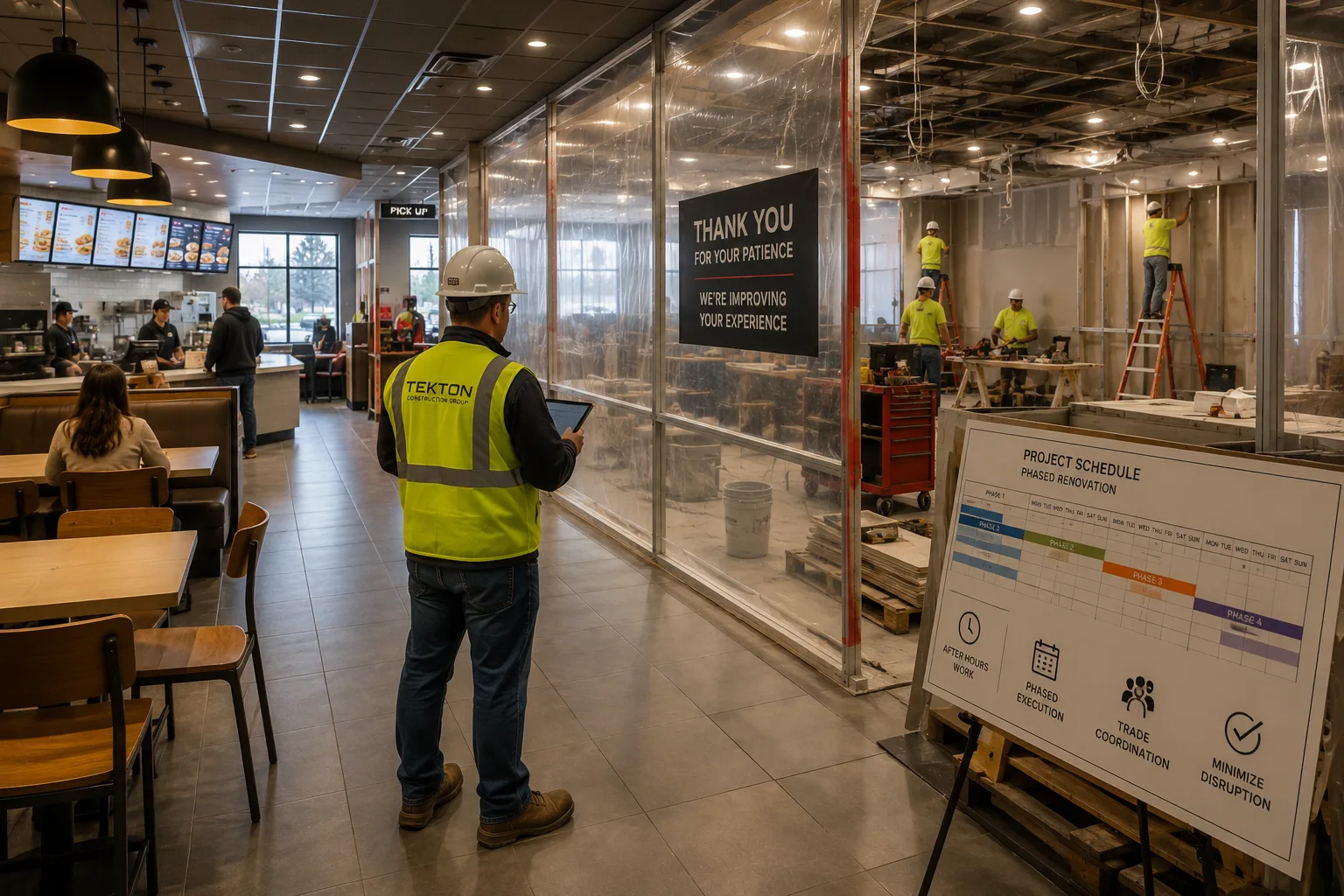
Material choices and scope decisions get most of the attention in value optimization conversations. But how and when work gets executed is just as significant, and it's often where the real savings are found.
A few questions we work through on every project:
Does this work require after-hours or weekend execution? After-hours and weekend work carries premium labor costs. Not every scope requires it. Some improvements can be phased and sequenced to run during normal business hours without impacting the customer experience, which changes the labor equation significantly.
Does the store need to close? Keeping a location operational during construction requires planning, but it's often achievable. The right sequencing, temporary barriers, and coordination with store management can allow work to proceed while keeping the space food-safe and customer-safe. A closure costs the brand revenue. Avoiding one has real dollar value.
Can trade scopes be consolidated? When multiple trades are already mobilized on a project, brands are increasingly asking whether adjacent scopes can be absorbed by a qualified crew already on site rather than mobilizing a separate contractor. A mobilization fee gets charged just to get crew, equipment, and material to the site, and it's owed whether the scope runs two days or two weeks. Done right, this isn't about cutting corners, it's about deploying capable resources efficiently and avoiding redundant mobilization fees that add cost without adding value.
Are materials and equipment being coordinated to reduce logistics costs? Deliveries, staging, and equipment rentals all carry costs that compound when they're managed reactively. Coordinating supply deliveries to align with project phases, consolidating equipment rentals across scopes, and sequencing material drops to reduce on-site storage time are all areas where a GC with strong logistical discipline reduces overhead without touching the quality of the finished product.
These aren't line items on a bid. They're decisions made before the bid, by a GC who's thinking about the full cost of the project, not just the construction cost.
Trade sequencing is another place where experience shows. In a small restaurant footprint, there's no room for trades to stack on top of each other without a plan. When crews end up in the same space at the same time, nobody gets to their scope and the day is gone. The difference between a project that finishes on time and one that stalls is often how well the GC has mapped which trades need to be in and out before the next ones can move. When the schedule demands it, running day and night shifts and alternating trades keeps progress moving around the clock without crews getting in each other's way. In a tight space, that kind of coordination isn't a luxury. It's what keeps the job on track.
What This Means for Brands and Their Construction Teams
Value optimization done right requires a GC who understands the goal behind the spec, not just the spec itself. The question isn't "where can we cut?" It's "where can we achieve the same outcome for less?"
That distinction matters. A contractor who just finds the cheapest sub or swaps materials without understanding performance requirements will create problems that cost more to fix than the original savings. A contractor who knows what the brand is trying to protect, and what actually has room to move, keeps the budget and the brand standard intact at the same time.
We're having those conversations earlier now. That's a good thing for everyone.
Questions We Get Asked
What is value optimization in QSR construction? It's working out where a project can hit the same operational and brand outcome for less money, and doing that work up front instead of after the bid. It covers scope, material selection, building type, site work, labor scheduling, logistics, and trade sequencing. The goal isn't the lowest number on every line. It's knowing which dollars are buying something and which ones aren't. Most of the industry calls this value engineering.
Is it cheaper to convert an existing building than to build ground-up? Usually. A ground-up build carries full site work, foundation, shell, and the permitting that goes with all of it. An existing building takes most of that off the table. A second-generation restaurant space helps even more, because some of the kitchen and utility infrastructure is already in.
Why polished concrete instead of tile? Lower install cost, no adhesive or grout, and less long-term maintenance in high-traffic areas. For a brand running a lot of locations, that maintenance number matters more than the install number.
Asphalt or concrete for a restaurant parking lot? Both, in most cases. Asphalt across the standard parking field, concrete where the loads concentrate. Drive-thru lanes and dumpster pads still need it.
Can a store stay open during construction? Often, yes. It takes sequencing, temporary barriers, and coordination with store management to keep the space food-safe and customer-safe. A closure costs the brand revenue, so it's worth planning around.
What is a mobilization fee? It's what a contractor charges just to get crew, equipment, and material to the site. It gets charged whether the scope takes two days or two weeks, which is why consolidating adjacent work under a crew that's already there can save real money.
If you're planning a remodel, conversion, or multi-site rollout and want these decisions worked out before the bid instead of after, let's talk.
Tekton Construction Group is a commercial general contractor specializing in QSR tenant improvements, facilities maintenance, and site work across the Southeast and Midwest.